Paris subway lines
16 lines and 309 stations, all playable in HelloSubway.
The first Paris Métro line opened on July 19, 1900, between Porte Maillot and Porte de Vincennes, during the World’s Fair. That route is today’s Line 1. It reached Château de Vincennes in 1934, Pont de Neuilly in 1937 and La Défense in 1992, and it was converted to driverless operation between 2007 and 2011. Line 2 followed on December 13, 1900, and Lines 3, 5, 4, 7, 8 and 9 opened between 1904 and 1922.
Two lines began as the Nord-Sud company’s lines A and B, which opened in 1910 and 1911. The company was absorbed in 1930 and the lines became Lines 12 and 13. Line 11 opened on April 28, 1935. Lines 3bis and 7bis, the two short independent lines, were cut away from Lines 3 and 7 in 1971 and 1967.
Line 14 opened on October 15, 1998 as the first fully automatic line. In 2024 Line 11 was extended east to Rosny - Bois-Perrier and Line 14 was extended to Saint-Denis Pleyel and Aéroport d’Orly, which made it the longest line of the network. HelloSubway has all 16 lines of the Métro. The Grand Paris Express lines 15 to 18 are not open yet and are not included.
Paris in photos
Photos of Paris and of places you pass on its lines. Every photo is credited to its photographer under its open licence.
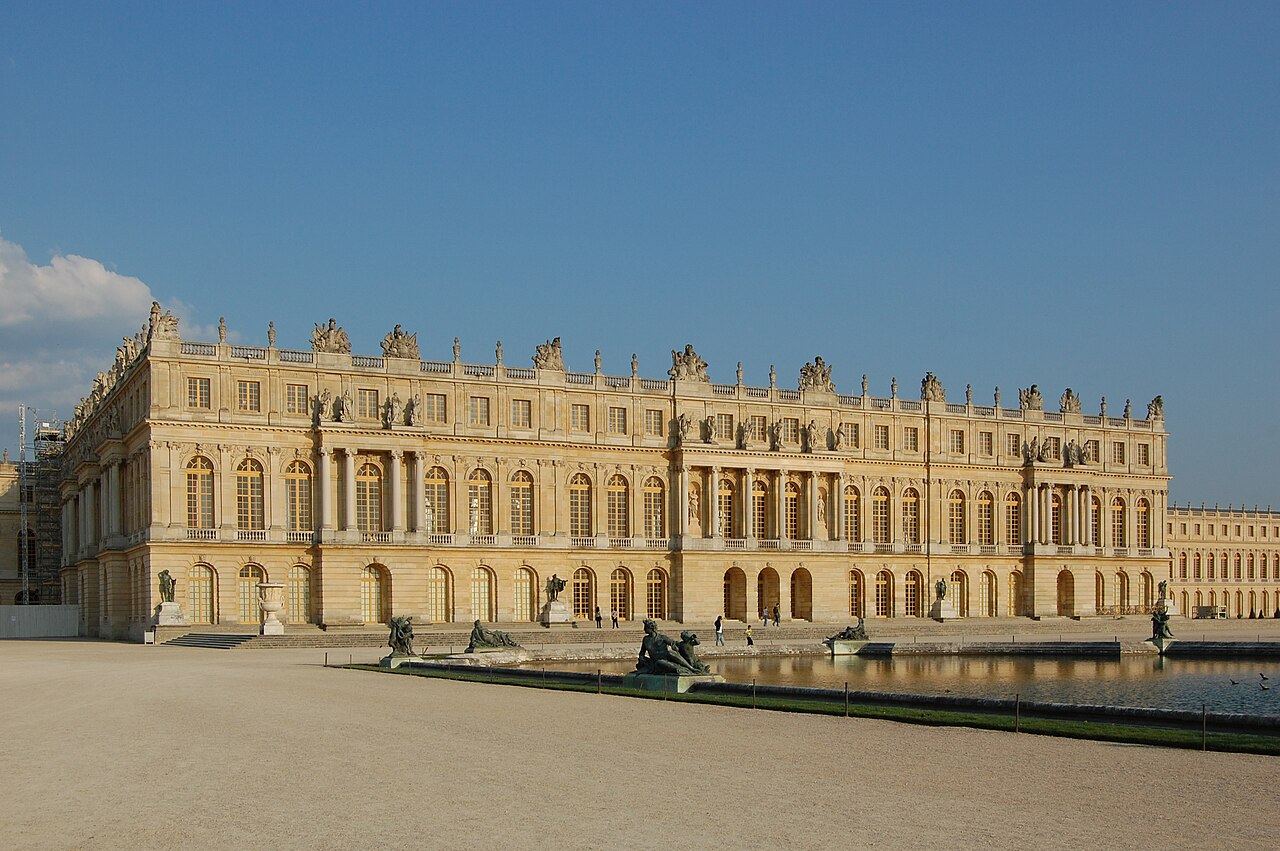
Photo: Trizek · CC BY-SA 3.0 
Photo: Eureka-WMF · CC BY-SA 4.0 
Photo: Arunkumar Vijayan · CC BY-SA 4.0 
Photo: Alvesgaspar · CC BY-SA 3.0 
Photo: Uoaei1 · CC BY-SA 4.0 
Photo: Fernando Losada Rodríguez · CC BY-SA 4.0 
Photo: Sumit Surai · CC BY-SA 4.0 
The Eiffel Tower from the Jardins du Trocadéro at Trocadéro. The Eiffel Tower above the pools and lawns of the Jardins du Trocadéro, with the dome of Les Invalides in the distance.Photo: Nelson Pérez · CC BY-SA 3.0 
The Arc de Triomphe at Charles de Gaulle - Étoile. Begun in 1806 for Napoleon and finished in 1836 under Louis-Philippe, the Arc de Triomphe is about 50 m high. It stands at the centre of Place Charles-de-Gaulle, where twelve avenues meet.Photo: A Chinese ID · CC BY-SA 4.0 
The east end of the Sainte-Chapelle at Cité. The east end of the Sainte-Chapelle and its slender spire among the buildings of the Palais de la Cité, about 90 metres from the station. The upper chapel was consecrated in 1248.Photo: Uoaei1 · CC BY-SA 4.0 
The Sacré-Cœur seen from Rue Briquet at Anvers. Between two corner buildings, the white domes of the Sacré-Cœur rise over Rue Briquet, a few minutes' walk from the Montmartre hill.Photo: Renée Kools · CC BY 4.0 
The Moulin Rouge at Blanche. The red windmill that crowns the entrance of the cabaret, opened in 1889 on Boulevard de Clichy right next to Place Blanche.Photo: Guilhem Vellut · CC BY 2.0 
Oscar Wilde's tomb at Père Lachaise. Oscar Wilde's tomb, a large block of stone carrying his name, now protected by a glass screen.Photo: ManoSolo13241324 · CC0 
The Palais Garnier at Opéra. The main front of the Palais Garnier: columns, carved medallions and gilded lettering reading “Académie nationale de musique”, under flags. The opera house opened in 1875.Photo: Chabe01 · CC BY-SA 4.0 
The Gare de Lyon clock tower at Gare de Lyon. The 67 m clock tower was built for the 1900 World's Fair by Marius Toudoire and rises above the station building.Photo: Chabe01 · CC BY-SA 4.0
Stories about Paris
- All 16 Paris Métro lines, ranked by how hard they are to type
- Typing Paris Métro station names without accents
- The Paris Métro in eight dates: from Line 1 in 1900 to Line 14 in 2024
Station names in Paris
Station names keep their French spelling, such as Châtelet or Saint-Germain-des-Prés. You can type them with or without accents, so Chatelet works, but spaces, hyphens and apostrophes are typed as shown. Line 7 and Line 13 fork, and the game follows the Villejuif and Saint-Denis branches; the other branches are drawn dashed on the map.
All Paris lines
- Line 125 stations · Lv 4/7 · ~371 keystrokes
Line 1 opened on July 19, 1900, between Porte Maillot and Porte de Vincennes, to carry visitors between the sites of the World's Fair. It reached Château de Vincennes in 1934, Pont de Neuilly in 1937 and La Défense in 1992. Conversion to driverless operation ran from 2007 to 2011.
- Line 225 stations · Lv 3/7 · ~269 keystrokes
Line 2 opened on December 13, 1900, between Porte Dauphine and Étoile, as part of the second wave of the Métro. It was extended to Anvers in 1902, to Rue de Bagnolet (now Alexandre Dumas) in January 1903, and reached Nation on April 2, 1903, completing its current route in a wide arc across the north of Paris.
- Line 325 stations · Lv 3/7 · ~291 keystrokes
Line 3 opened on October 19, 1904, between Villiers and Père Lachaise. It reached Gambetta in January 1905, was pushed west to Pereire in 1910 and Porte de Champerret in 1911, and crossed into Levallois-Perret to Pont de Levallois - Bécon in 1937. In 1971 it was extended east from Gambetta to Gallieni, in the suburb of Bagnolet.
- Line 429 stations · Lv 4/7 · ~403 keystrokes
Line 4 opened on April 21, 1908, between Porte de Clignancourt and Châtelet. The southern section, from Porte d'Orléans, opened in 1909, and in January 1910 the central section from Châtelet to Raspail joined the two halves together. It was extended south to Mairie de Montrouge in 2013 and to Bagneux - Lucie Aubrac in January 2022, taking it beyond the city limits.
- Line 522 stations · Lv 3/7 · ~290 keystrokes
Line 5 opened on June 2, 1906, between Gare d'Austerlitz (then called Gare d'Orléans) and Place d'Italie, and grew northward over the following years. On October 12, 1942 it was extended from Gare du Nord to Église de Pantin, and on April 25, 1985 it reached Bobigny - Pablo Picasso, its current northern terminus outside the city limits.
- Line 628 stations · Lv 3/7 · ~310 keystrokes
Line 6 grew from several pieces. On October 2, 1900 the section between Étoile and Trocadéro opened as an extension of line 1; it reached Passy on November 6, 1903, and Place d'Italie on April 24, 1906, crossing the Seine on the viaduct at Passy. The section from Place d'Italie to Nation opened in 1909, and in 1942 the pieces were joined into the present route, a half-circle around the south of the city.
- Line 733 stations · Lv 5/7 · ~507 keystrokes
Line 7 opened on November 5, 1910, between Opéra and Porte de la Villette. On May 1, 1946 a branch reached Mairie d'Ivry in the south; the Villejuif branch followed in 1985. In the north the line was extended to Fort d'Aubervilliers in 1979 and to La Courneuve - 8 mai 1945 in 1987. It splits at Maison Blanche, and the route you type here follows the Villejuif branch; the Mairie d'Ivry branch is drawn dashed on the map.
- Line 838 stations · Lv 6/7 · ~593 keystrokes
Line 8 opened on July 13, 1913, between Beaugrenelle and Opéra. It was pushed north to Richelieu - Drouot in 1928 and on to Porte de Charenton in 1931, and in 1937 it was rerouted from La Motte-Picquet - Grenelle to a new terminus at Balard. It crossed the Marne into the suburbs and reached Créteil - Préfecture in 1974, then Pointe du Lac in 2011. The route runs from the southwest of Paris under the Grands Boulevards and out to the southeast.
- Line 937 stations · Lv 5/7 · ~512 keystrokes
Line 9 opened on November 8, 1922, between Trocadéro and Exelmans, and over the next years it was extended step by step. It first reached the suburbs at Pont de Sèvres on February 3, 1934, and on October 14, 1937 it was extended east to Mairie de Montreuil. The route crosses the 16th arrondissement, the Grands Boulevards and the eastern districts, from Boulogne-Billancourt to Montreuil.
- Line 1020 stations · Lv 3/7 · ~296 keystrokes
Line 10 opened in 1923 and was extended east to Gare d'Austerlitz in 1939 and west to Boulogne - Pont de Saint-Cloud in 1981. It runs across the Left Bank and the Auteuil district into Boulogne-Billancourt. In the Auteuil section the trains run in a one-way loop: Michel-Ange - Molitor and Chardon-Lagache are served only toward Austerlitz, while Église d'Auteuil, Michel-Ange - Auteuil and Porte d'Auteuil are served only toward Boulogne.
- Line 1119 stations · Lv 2/7 · ~246 keystrokes
Line 11 opened on April 28, 1935, between Châtelet and Porte des Lilas, and was extended to Mairie des Lilas in 1937. On June 13, 2024 it was extended east with six new stations, reaching Rosny - Bois-Perrier. The route climbs from the city centre through the Marais and Belleville to the eastern suburbs of Les Lilas, Romainville, Montreuil and Rosny-sous-Bois.
- Line 1231 stations · Lv 5/7 · ~441 keystrokes
Line 12 was built by the Nord-Sud company, which opened it in 1910 between Porte de Versailles and Notre-Dame-de-Lorette, and it was extended to Pigalle in 1911 and Jules Joffrin in 1912. The Nord-Sud was absorbed by the CMP in 1930 and the line became line 12. On March 24, 1934 it was extended south to Mairie d'Issy, and it was extended north to Front Populaire in 2012 and to Mairie d'Aubervilliers in 2022. It links Montparnasse, Saint-Germain, the Madeleine, Montmartre and the northern suburbs.
- Line 1326 stations · Lv 4/7 · ~406 keystrokes
Line 13 combines two former lines: the Nord-Sud company's line B, which opened between Saint-Lazare, La Fourche and Porte de Saint-Ouen on February 26, 1911 and reached Porte de Clichy in 1912, and a southern line to Châtillon. The two were joined in 1976 into a single north-south line. It was extended north to Gabriel Péri in 1980 and to Saint-Denis - Université on May 25, 1998. North of La Fourche the line splits into two branches, toward Saint-Denis - Université and toward Asnières - Gennevilliers - Les Courtilles; the typing route follows the Saint-Denis branch.
- Line 1421 stations · Lv 3/7 · ~303 keystrokes
Line 14, the first fully automatic line of the Paris métro, opened on October 15, 1998 between Madeleine and Bibliothèque François Mitterrand. It was extended to Saint-Lazare on December 16, 2003, to Olympiades on June 26, 2007, and to Mairie de Saint-Ouen on December 14, 2020. On June 24, 2024 it was extended north to Saint-Denis Pleyel and south to Aéroport d'Orly, making it the longest line of the network.
- Line 3bis4 stations · Lv 1/7 · ~45 keystrokes
Line 3 was extended from Gambetta to Porte des Lilas on November 27, 1921, with stops at Pelleport and Saint-Fargeau. When line 3 was extended to Gallieni on April 2, 1971, this branch was cut off to form its own line, 3bis. At 1.3 kilometres and four stations it is the shortest line of the Paris métro.
- Line 7bis8 stations · Lv 1/7 · ~85 keystrokes
On January 18, 1911 the section between Louis Blanc and Pré-Saint-Gervais opened as a branch of line 7. On December 3, 1967, because ridership on the two northern branches of line 7 was so uneven, this branch was separated and became its own line, 7bis. With eight stations and 3.1 kilometres it is the second shortest line of the network, and it ends in a small loop through Place des Fêtes, Pré-Saint-Gervais and Danube.